The Forks Guide
The Ramen Broth Guide
A guide to the main ramen broths — tonkotsu, shoyu, miso, shio, and vegetarian — so you can choose the right base at a self-serve ramen bar.
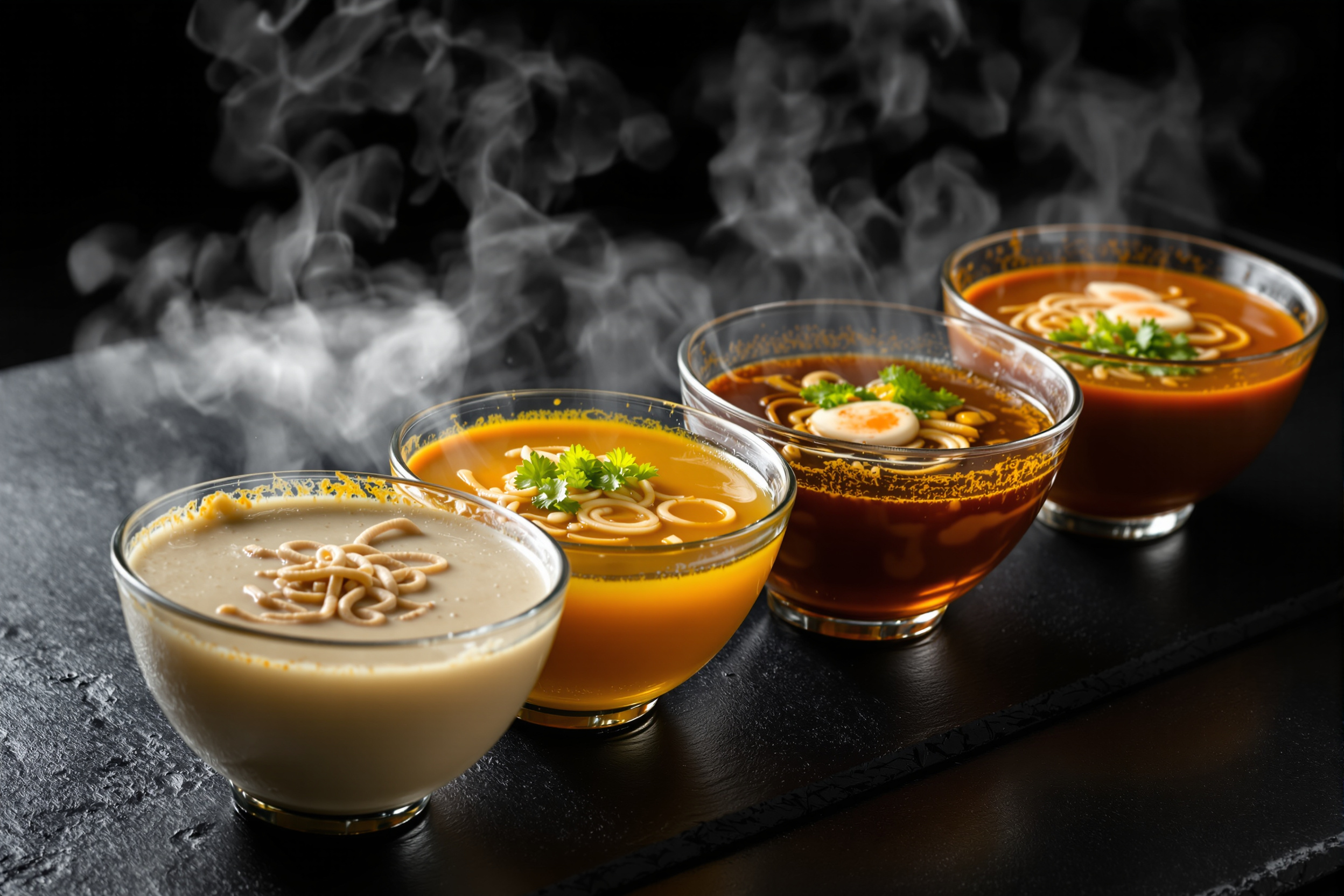
Broth is the heart of ramen. Everything else — the noodles, the toppings, the finishing oils — orbits around the soup. At a self-serve ramen bar, choosing your broth is the first and most important decision you make, so it pays to know the main styles. Here is a friendly field guide to the bases you are most likely to meet.
Tonkotsu: Rich and Creamy
Tonkotsu means “pork bone.” This broth is made by simmering pork bones for hours until the collagen breaks down into a milky, almost creamy soup. It is the heavyweight of the ramen world — bold, savory, and deeply satisfying. Tonkotsu stands up to strong toppings and thick noodles, and it is often the crowd favorite for good reason. If you like richness, start here.
Shoyu: Savory and Balanced
Shoyu (soy sauce) ramen is arguably the most classic style. A clear, brown, soy-seasoned broth delivers a savory, slightly tangy flavor that is rich without being heavy. It is endlessly versatile and pairs beautifully with almost any topping, which makes it a fantastic default for first-timers. When in doubt, shoyu rarely disappoints.
Miso: Hearty and Complex
Miso ramen leans on fermented soybean paste for a thick, hearty, subtly sweet-and-salty broth with real depth. It originated in Hokkaido, Japan’s cold northern island, and it is the ultimate comfort bowl for a chilly night. Miso loves corn, butter, bean sprouts, and ground or sliced pork. If you want something warming and full-bodied, this is your broth.
Shio: Light and Clean
Shio means “salt,” and shio ramen is the lightest, clearest of the classic broths. Seasoned primarily with salt, it lets the underlying stock — often chicken or seafood — shine through. The flavor is delicate and clean, perfect if you want to taste the broth itself rather than a heavy seasoning. Pair it with thin noodles and restrained toppings.
Vegetarian and Vegan Broths
Great meat-free ramen is very much a thing. Vegetarian broths are typically built from kombu (kelp), dried shiitake mushrooms, soy, and aromatics like garlic and ginger, producing a savory, umami-rich base without any animal products. Many self-serve bars offer a plant-based broth so vegetarians and vegans can build a full, satisfying bowl. Load it with tofu, mushrooms, corn, and greens.
The World Instant Noodles Association’s broth overview describes vegetable broths as popular among vegetarians in India, Nepal, Europe, and America, and also notes mushroom and tomato flavors.
Salt, Sodium, and Dialing In the Intensity
Ramen broth is seasoned assertively by design, and at a self-serve station you are the one holding the ladle. Two levers matter. The first is the ratio of tare to stock: a heavier pour of concentrate makes a punchier bowl and a saltier one, and most self-cook setups let you go lighter than the posted measure if you prefer. The second is everything you add afterwards — soy, chili oil, and pickled toppings all carry salt of their own, so a bowl that tasted balanced coming off the unit can end up sharper than you intended. The habit worth building is simple: taste the broth first, then season, rather than the other way round.
For context, the FDA’s sodium guidance gives a Daily Value of less than 2,300 milligrams per day and reports average American intake of about 3,400 milligrams. FDA says over 70% of dietary sodium comes from packaged and prepared foods, and advises limiting instant products, including instant noodles. Those daily figures do not tell you the sodium content of a particular bowl. If you are comparing packaged noodles or seasoning mixes, use their Nutrition Facts labels rather than estimating from the broth’s appearance or flavor. Compare each label’s stated amount per serving with the actual serving size you plan to use.
Understanding Umami
What makes all of these broths so crave-worthy is umami — the savory “fifth taste” identified by Japanese chemist Kikunae Ikeda in the early 1900s. Umami comes from compounds like glutamates found in kombu, mushrooms, soy, and slow-simmered bones, and it is the reason a good broth tastes so complete. You can read more about the science of umami from the Encyclopaedia Britannica.
Which Broth Should You Choose?
- Want rich and filling? Tonkotsu or miso.
- Want a reliable all-rounder? Shoyu.
- Want light and clean? Shio.
- Want plant-based? A kombu-and-mushroom vegetarian broth.
Once your broth is chosen, move on to the fun part: noodles and toppings. And if you are still assembling the big picture, the build-your-bowl guide shows how broth fits into a balanced bowl.