The Forks Guide
What Is Self-Serve Ramen?
Self-serve ramen lets you cook your own bowl at a station: choose noodles, broth, and toppings. Learn the concept, its Korean roots, and how self-cook ramen works.
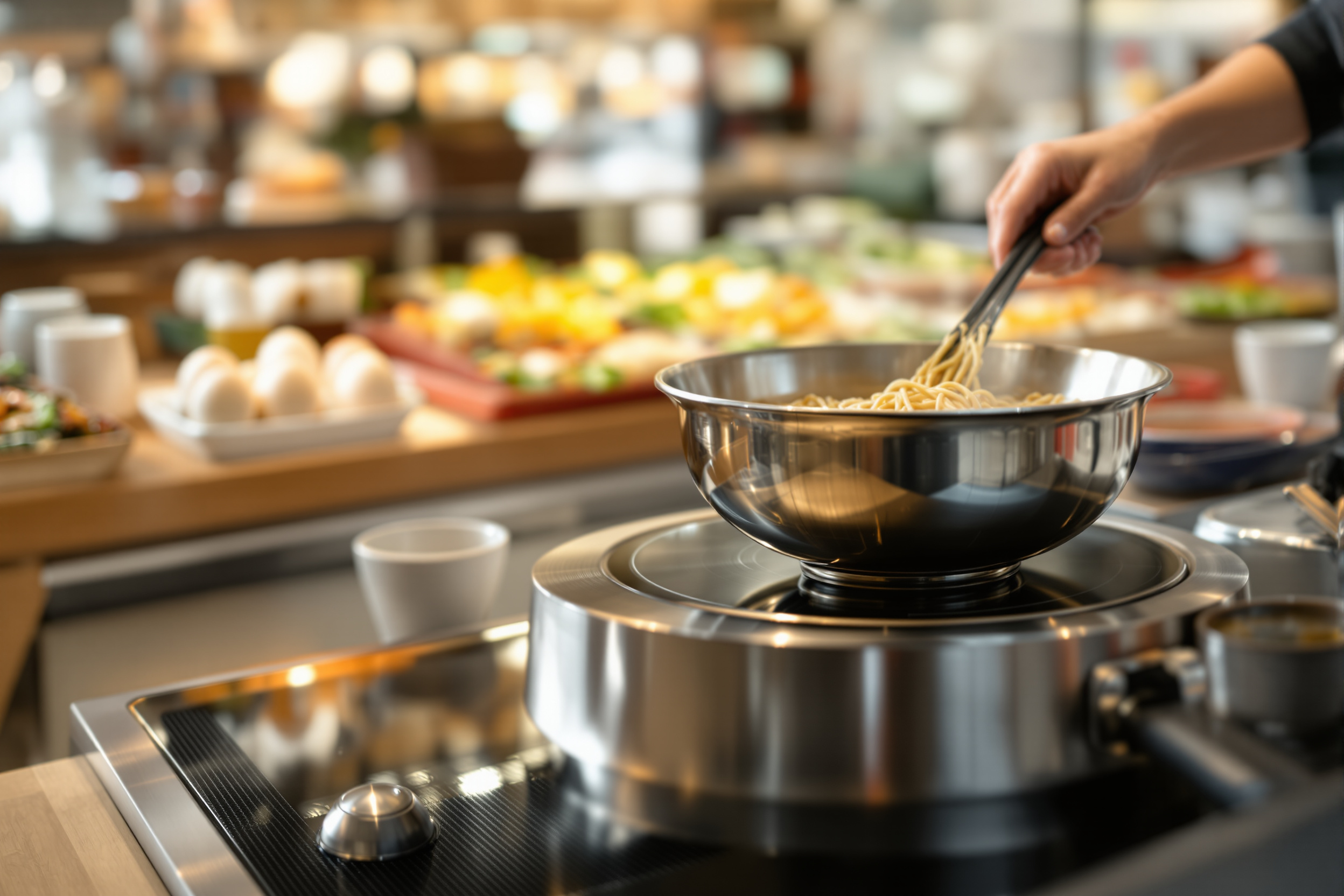
Self-serve ramen — often shortened to “self ramen” — flips the usual restaurant script. Instead of a chef assembling your bowl behind the counter, you build and cook it yourself at a self-serve station. You pick your noodles, ladle your broth, load up on toppings, and finish the bowl at a compact cooking unit designed to bring everything to a perfect, steaming boil in a couple of minutes. It is fast, fun, endlessly customizable, and surprisingly hard to get wrong.
Where the Idea Comes From
The self-cook format has deep roots in Korean convenience-store culture. Walk into a Korean corner store and you will often find a ramyeon machine: a small automated cooker where you drop in a package of instant noodles, press a button, and eat right there at the window counter. That grab-and-cook ritual became a social institution, especially among students and late-night snackers. Over time, sit-down concepts borrowed the format and elevated it — swapping cheap instant blocks for fresh noodles, house broths, and a proper toppings bar. The result is the self-serve ramen bar you see spreading across the United States today, frequently in and around Korean-American dining hubs.
How a Self-Cook Station Works
The exact setup varies, but most self-serve ramen bars follow the same loop:
- Choose your base. Grab a bowl or cooking vessel and select your noodles — usually fresh wheat ramen noodles, sometimes with alternatives for different diets.
- Add broth. Pour or ladle your chosen broth. Some venues pre-portion broth concentrate; others have urns of simmering stock.
- Cook. Place the vessel in the self-cook unit — an induction or electric boiler — and let it run for the posted time. A timer or automatic cycle does the hard part.
- Top it off. Finish with toppings from the bar: soft-boiled egg, sliced pork or tofu, scallions, corn, nori, sesame, chili oil, and more.
- Season and slurp. Adjust with the condiments on hand, then find a seat — often beside a gaming station or lounge.
Because you control every step, two people can start with the same ingredients and end up with completely different bowls. Our build-your-bowl guide walks through how to balance those choices.
Allergens and Shared Equipment
Building your own bowl gives you unusually good control over what goes into it, which is one of the format’s quiet advantages for anyone eating around an allergy or a dietary restriction. The caveat is the equipment. Self-cook units, ladles, and tongs are shared; broths may be built on fish or pork stock even when they look light; and a toppings bar is by definition an open counter where a serving spoon can travel between trays. If something matters, ask at the counter before you build — staff can usually tell you which bases contain shellfish, dashi, egg, or gluten, whether noodles are cooked in dedicated water, and whether a vegetarian broth is fully vegan. Read the labels on the bar too; most venues post ingredients beside each tray.
Why People Love It
- Customization. Spicy or mild, meaty or vegetarian, brothy or rich — every bowl is yours.
- Speed. Self-cook units are quick, so there is no long kitchen wait.
- Value. The format tends to be affordable, which makes it a natural fit for students and gamers.
- Interactivity. Cooking your own food is genuinely fun, and it pairs perfectly with the social energy of a gaming cafe.
Is It the Same as Instant Ramen?
Not quite. Instant ramen is a specific product — a dried noodle block with a seasoning packet — and it changed the world; Serious Eats has a thorough primer on the broader ramen family. Self-serve ramen is a format: it can use instant noodles, fresh noodles, or a mix, but the defining feature is that you cook and assemble the bowl yourself. Many modern self-serve bars use fresh noodles and real broths, landing somewhere between a convenience-store snack and a full ramen-ya experience.
Ready to Try It?
If you are new to the format, read our first-timer’s guide before you go, and skim the ramen glossary so the toppings bar feels familiar. The beauty of self-serve ramen is that there is no wrong way to do it — only your way.