The Forks Guide
Build Your Bowl: The Anatomy of a Great Ramen
A step-by-step guide to building a balanced ramen bowl at a self-serve bar: broth, noodles, tare, proteins, vegetables, and finishing touches.
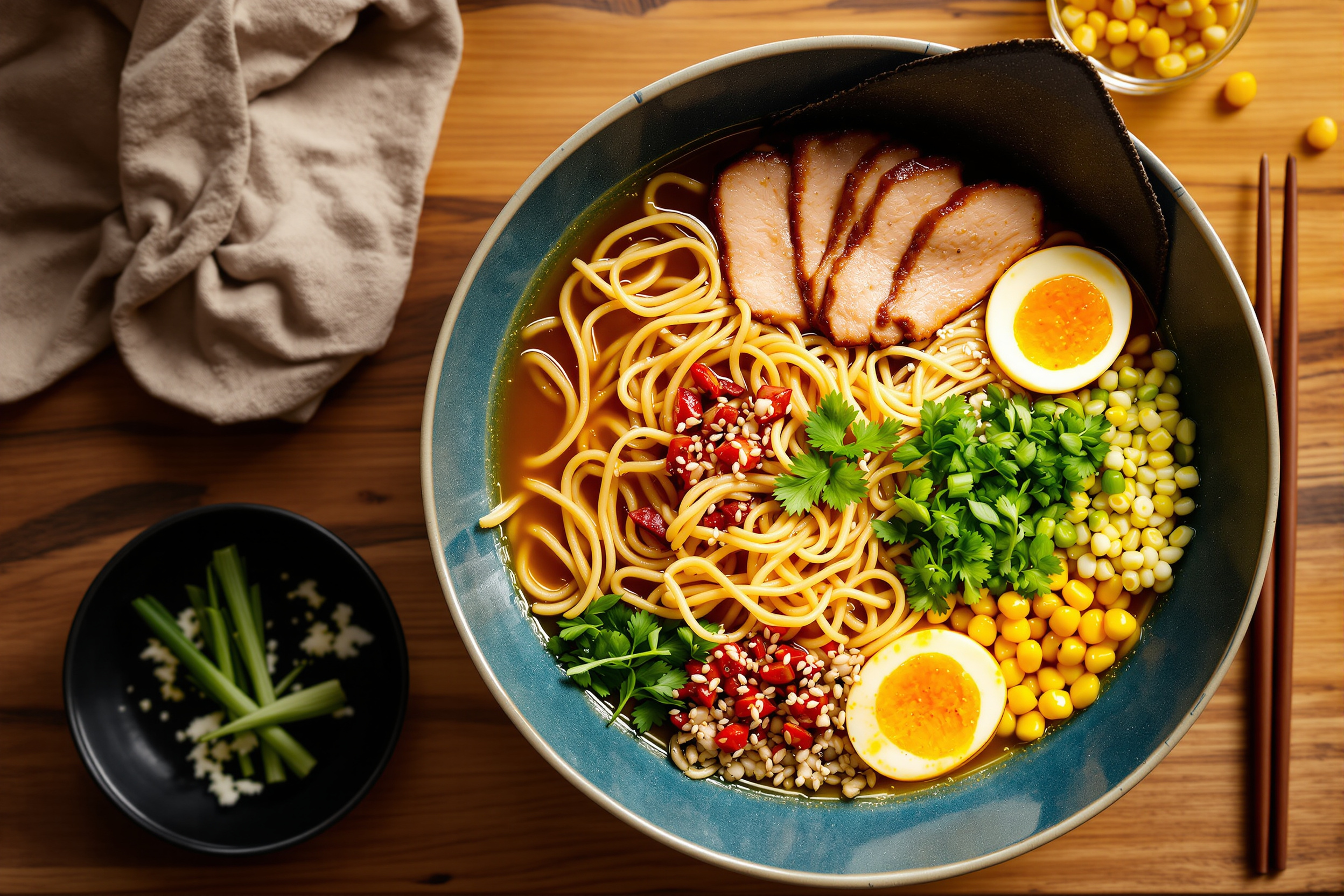
A ramen bowl looks simple, but a great one is a small act of balance. At a self-serve ramen bar you get to make every call yourself, which is thrilling and, for a first-timer, a little daunting. This guide breaks a bowl into its parts so you can assemble something delicious on purpose rather than by luck.
The Five Building Blocks
Classic ramen is built from a handful of components. Master these and you can improvise forever:
- Broth — the soul of the bowl. Rich and porky, light and clear, or savory and vegetal. See our broth guide.
- Tare — the concentrated seasoning base (often soy, salt, or miso) that gives the broth its final character.
- Noodles — the texture and the vehicle. Thin and straight or thick and wavy.
- Toppings — proteins, vegetables, and garnishes that add contrast and color.
- Aroma oil — a finishing drizzle like chili oil or garlic oil that ties everything together.
Step 1: Start With Broth and Tare
Choose your broth first, because it sets the tone for everything else. A heavy tonkotsu can carry bold toppings; a delicate shio wants a lighter hand. If the station separates broth and tare, add tare gradually and taste — it is far easier to add seasoning than to fix an over-salted bowl.
Step 2: Pick Noodles That Match
As a rule of thumb, richer broths pair with thicker, wavier noodles that grab onto all that flavor, while lighter broths shine with thin, straight noodles. Cook them to the posted time — slightly firm (what Italians would call al dente) is ideal, because they keep cooking in the hot broth. Overcooked noodles turn soft fast, so err on the shorter side.
Step 3: Layer Your Toppings
Think in terms of contrast — something rich, something fresh, something crunchy:
- Protein: sliced pork (chashu), chicken, tofu, or a soft-boiled marinated egg.
- Vegetables: scallions, bean sprouts, corn, mushrooms, bamboo shoots (menma), spinach.
- Garnish: nori (seaweed), sesame seeds, pickled ginger, a squeeze of citrus.
Do not overload the bowl. Three to five well-chosen toppings beat a mountain of ten. Our noodles and toppings guide goes deeper on each option.
Step 4: Finish and Balance
Add your aroma oil last, and taste before you dig in. Too flat? A touch more tare or a pinch of salt. Too rich? A squeeze of citrus or a few fresh scallions cuts through. This tasting-and-adjusting habit is exactly what professional cooks do: build in layers, taste as you go.
A Simple Starter Combination
If you want a can’t-miss first bowl, try a shoyu (soy) broth with medium wavy noodles, sliced pork or tofu, a soft-boiled egg, scallions, corn, and a sheet of nori, finished with a light drizzle of chili oil. It is balanced, forgiving, and a great baseline to riff on next time.
Make It Yours
The best part of building your own bowl is that it is impossible to run out of new combinations. Keep notes on what you liked, and each visit becomes an experiment. When you are ready, read the broth guide to fine-tune the foundation of every bowl you build.