The Forks Guide
Ramen Noodles & Toppings: A Complete Guide
From thin straight noodles to chashu pork, soft-boiled eggs, nori and menma — a complete guide to ramen noodles and toppings at a self-serve bar.
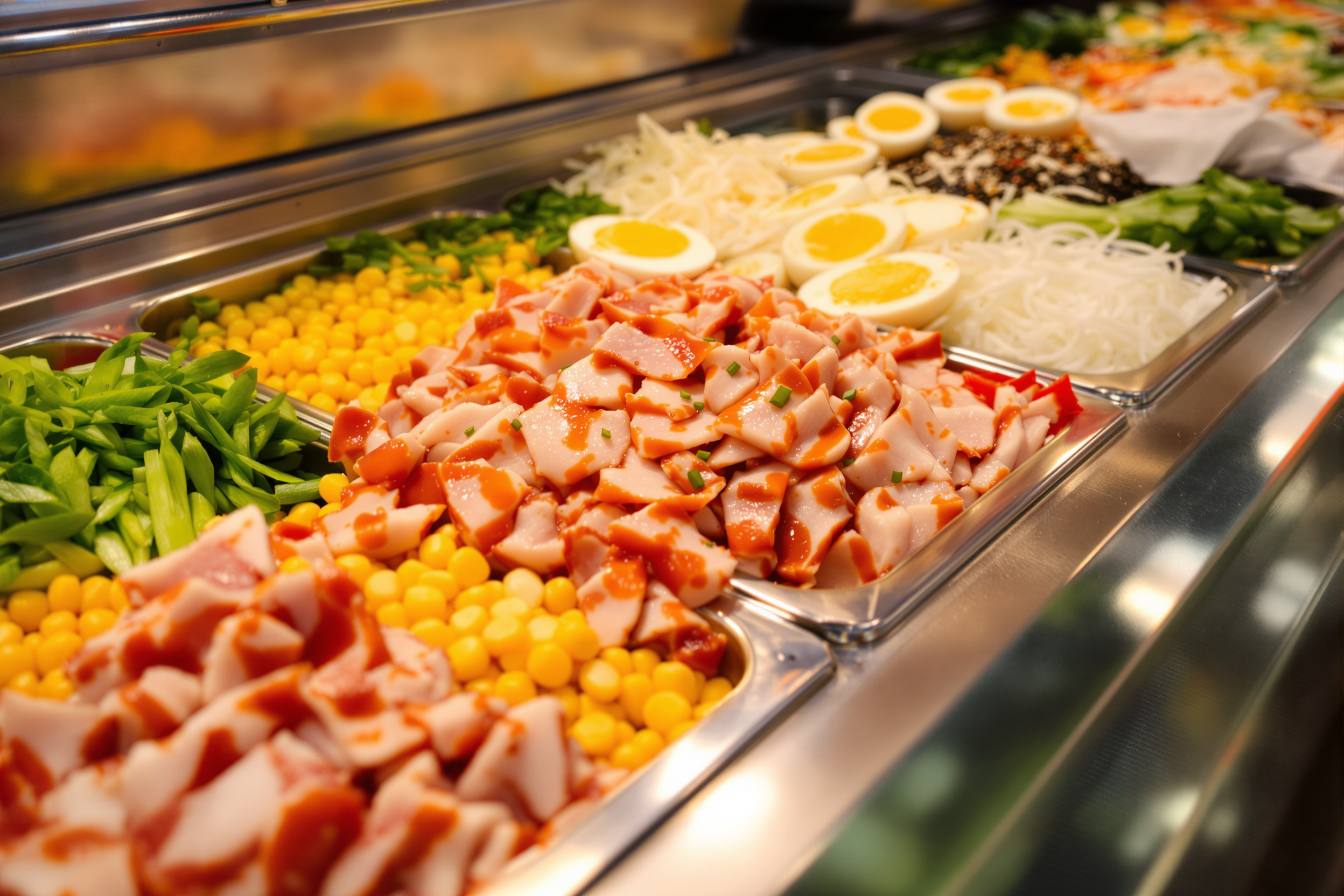
If broth is the soul of ramen, noodles and toppings are its body — the texture, the color, the little surprises in every spoonful. At a self-serve ramen bar, the toppings bar is where bowls get personal. This guide covers the noodles you will encounter and the toppings worth knowing, so you can layer with confidence.
Know Your Noodles
Ramen noodles are made from wheat flour, water, salt, and an alkaline mineral water called kansui, which gives them their signature springy bite and yellow tint. The main variables are thickness and shape:
- Thin, straight noodles cook fast and suit light broths like shio and some shoyu.
- Thick, wavy noodles hold onto rich broths like tonkotsu and miso, delivering more flavor per bite.
- Medium noodles are the flexible middle ground and a safe all-purpose pick.
Cook to just firm — the noodles keep softening in the hot broth, so pulling them a touch early keeps the texture perfect.
Proteins
- Chashu: braised or rolled pork, sliced thin and melt-in-your-mouth tender. The classic ramen protein.
- Chicken: lighter than pork and a great match for shio and shoyu broths.
- Tofu: the go-to plant-based protein; soaks up broth beautifully.
- Marinated soft-boiled egg (ajitama): a jammy, soy-marinated egg that is many people’s favorite topping. Halve it to show off the custardy yolk.
Vegetables
- Scallions (negi): sharp, fresh, and essential — they cut through richness.
- Bean sprouts: crunch and freshness, especially good in miso bowls.
- Corn: a touch of sweetness; a Hokkaido-style favorite with miso and butter.
- Menma: seasoned fermented bamboo shoots with a pleasant chew.
- Mushrooms: earthy depth; shiitake and wood-ear are common.
- Spinach or greens: color and a nutritional lift.
Garnishes and Finishers
- Nori: a sheet of dried seaweed that adds a briny, oceanic note.
- Sesame seeds: nutty aroma and gentle crunch.
- Chili oil or chili crisp: heat and fragrance; add gradually.
- Pickled ginger and garlic: brightness and punch for cutting through fat.
- Citrus (yuzu or lemon): a squeeze that lifts the whole bowl.
How to Layer Like a Pro
Balance is everything. Aim for one rich element (pork, egg), one or two fresh elements (scallions, greens), and one accent (nori, chili oil, citrus). Arrange toppings in tidy sections rather than dumping them in — it looks better and lets you taste each component. For a deeper look at ramen’s traditional components, the food team at Serious Eats is an excellent reference.
Dietary Notes
Many toppings are naturally vegetarian or vegan — tofu, corn, mushrooms, greens, nori, sesame — so a plant-based bowl can be every bit as satisfying as a meaty one. If you have allergies (wheat, soy, egg, shellfish), ask staff about ingredients before you build; the beauty of self-serve is that you control exactly what goes in. When you have your toppings sorted, revisit the build-your-bowl guide to put it all together.